We have compiled a list of manufacturers, distributors, product information, reference prices, and rankings for Fermentation wastewater treatment system.
ipros is IPROS GMS IPROS One of the largest technical database sites in Japan that collects information on.

Fermentation wastewater treatment system - List of Manufacturers, Suppliers, Companies and Products | IPROS GMS

Fermentation wastewater treatment system Product List

1~2 item / All 2 items

Displayed results

Cost and CO2 reduction through wastewater treatment - 5th Food Tech Japan Tokyo Exhibition

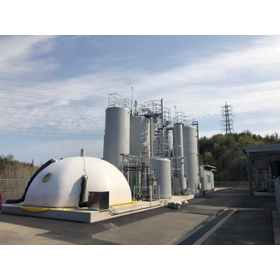
Changing wastewater treatment can reduce both costs and CO2 emissions. "Tokutoku-bububu" enables methane fermentation treatment of food wastewater.

Methane fermentation wastewater treatment is a method of wastewater treatment that utilizes microorganisms (anaerobic bacteria) that thrive in environments with little to no oxygen. Since aeration, which supplies air to the treatment tank, is unnecessary, it can significantly reduce power consumption. Additionally, this process converts the pollutants (organic matter) in the wastewater into methane gas. The generated methane gas has the same components as city gas and can be used as fuel for boilers and generators, thereby reducing the use of conventional fuels (fossil fuels). Furthermore, due to the slow growth of the microorganisms, the amount of excess sludge generated is also low, allowing for simultaneous waste reduction. These features not only reduce the running costs associated with wastewater treatment but also contribute to CO2 reduction. The reduction of fuel corresponds to Scope 1, the reduction of electricity corresponds to Scope 2, and the reduction of waste corresponds to Scope 3, making it a rapidly spreading technology for achieving decarbonization in factories. We will be exhibiting at the 5th Food Tech Japan Tokyo (to be held from November 20 to 22, 2024, at Makuhari Messe) at booth 2 Hall 7-54. We will also be showcasing this product, so please come and visit us.

  • Food environmental hygiene/contamination prevention equipment
  • Fermentation wastewater treatment system

Added to bookmarks

Bookmarks list

Bookmark has been removed

Bookmarks list

You can't add any more bookmarks

By registering as a member, you can increase the number of bookmarks you can save and organize them with labels.

Free membership registration

Cost and CO2 reduction through wastewater treatment - Exhibiting at FOOMA JAPAN 2026

By changing wastewater treatment, both costs and CO2 emissions can be reduced. "Tokutoku-bububu" enables methane fermentation treatment of food wastewater.

"Tokutoku-bubububu" methane fermentation wastewater treatment is a method that utilizes microorganisms (anaerobic bacteria) that thrive in environments with little to no oxygen for wastewater treatment. This process converts the pollutants (organic matter) in the wastewater into methane gas. The generated methane gas has the same composition as city gas, and by using it as fuel for boilers and generators, it is possible to reduce the use of conventional fuels (fossil fuels). 【Features】 - The amount of excess sludge generated is minimal, allowing for simultaneous waste reduction. - Contributes to reducing running costs for electricity consumption and CO2 emissions. Reduction of fuel corresponds to Scope 1, reduction of electricity corresponds to Scope 2, and reduction of waste corresponds to Scope 3, making it a rapidly spreading technology for achieving decarbonization in factories. ◎ We will exhibit at FOOMA JAPAN 2026 (June 2-5, 2026 @ Tokyo Big Sight). Our product will also be on display, so please come visit us. *For more details, please download the catalog or contact us.

  • Food environmental hygiene/contamination prevention equipment
  • Fermentation wastewater treatment system

Added to bookmarks

Bookmarks list

Bookmark has been removed

Bookmarks list

You can't add any more bookmarks

By registering as a member, you can increase the number of bookmarks you can save and organize them with labels.

Free membership registration